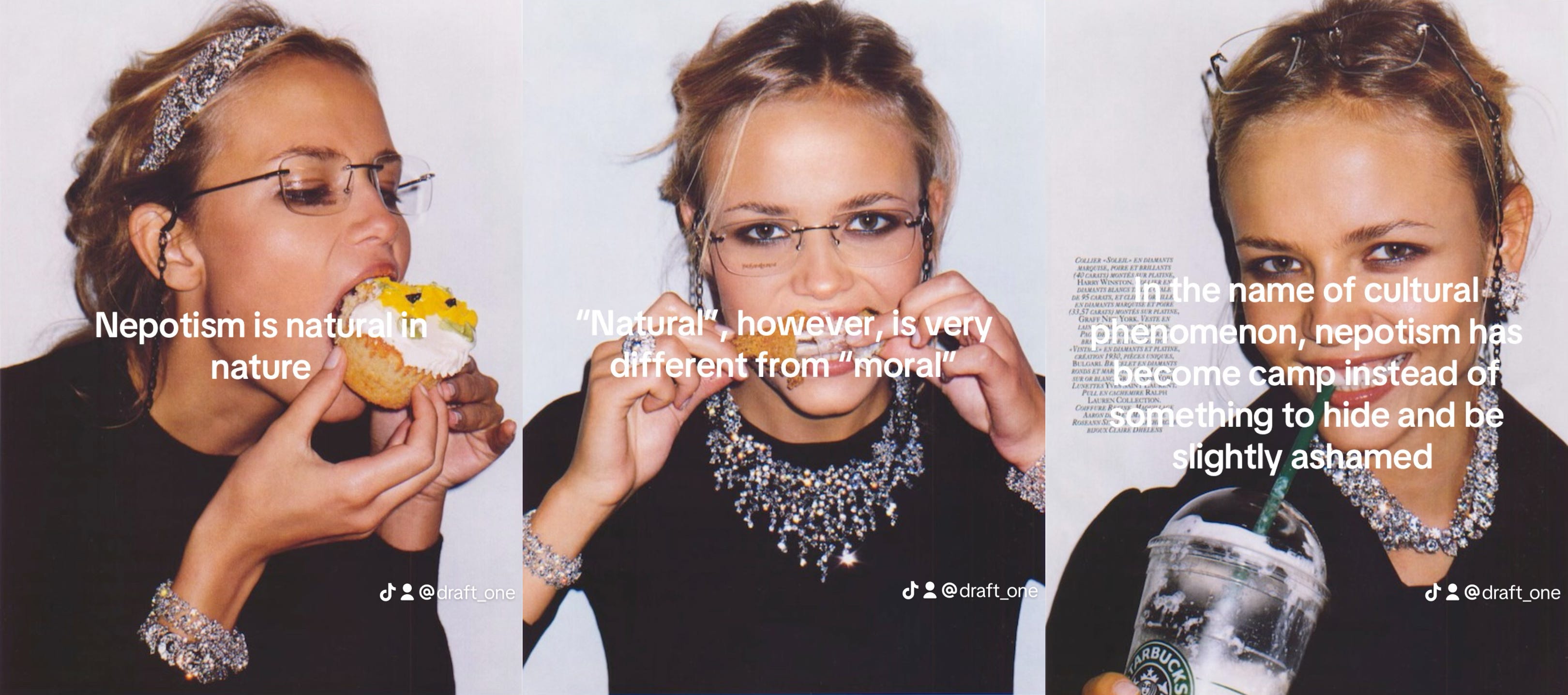
Nepotism is natural in nature
but it’s not the time to roll end credits on humanity yet.
“Natural”, however, is very different from “moral”. What does the casual not-so-quiet acceptance of nepotism say about the fall of moral? What does the fall of moral say about where humanity is headed?
Ever since the watershed moment of Hailey Bieber’s “Nepo Baby” t-shirt, something has shifted. Nepotism stopped being ashamed. At least in the past, there was an attempt to keep nepotism hidden, albeit in plain sight.
We live in a historically interesting time, characterised by free access to information and platforms for discussing it (somewhat) openly. The visibility of operating systems in society and the flaws are more clearly visible, and the communal aspect of social media allows for the private to become political. Yet we haven’t taken full advantage of it.
Wealth inequality is now worse than it was during the French Revolution. The visibility of the wealthy and their portrayal as “self-made” perpetuates a narrative that if you are poor, it is not a structural fault but a personal one of your own laziness and poor choices. It is this shame that keeps us as consumers, rather than becoming an angry mob of peasants with pitchforks storming the Permuda Triangle of Musk, Zuckerberg, and Bezos, as it were Versailles in 1987. But grabbing the pitchfork would mean admitting you are poor, exposing yourself as someone who is wealth signalling instead of being wealthy.
The casual acceptance of nepotism has made it appear almost campy. Is the celebration of inherited privilege a coping mechanism for realising as a society that most of us are peasants? I hope the rise of camp nepotism isn’t true acceptance, that it is a phase of cultural discomfort. When a system is too entrenched to dismantle immediately, we first turn it into a joke. We might be laughing with nepotism, not because we like it, but because we don’t know what to do with it. The pitchforks seem so drastic; there has to be something like soft-launching a revolution.
To go back to the Musk-Zuckerberg-Bezos triangle. There is something morally disorienting about the kind of wealth that arrives quickly, without precedent, and without societal guardrails. People have always gotten rich. It’s that our systems never imagined that a single individual could suddenly own the platform where elections are influenced, culture is shaped, and truth is moderated. Acquiring wealth and power has been shown to lead to entitlement, self-centeredness, and decreased empathy, i.e., moral becomes optional. So it is up to the peasant mob to keep things in balance, but if we refuse to acknowledge our peasantness, the acceptance of nepotism could be just a canary bird in the coal mine of what the future holds and what kind of totalitarian nepotism we are politely asked to accept next.
I’m not ready to roll end credits on humanity yet. What could soft-launching a revolution look like? By refusing to cosplay as the elite. You don’t have to grab a pitchfork. But at least stop dressing like you’re guarding the palace.
You can abandon fast-fashion versions of aristocratic aesthetics: “quiet luxury,” “old money style,” the beige, the camel, the performance of subtle entitlement. Instead of appearing wealthy, to appear awake. Instead of imitating privilege, cultivate a style that communicates awareness, curiosity, even dissent.
Fashion has always been political; it’s time we remembered. When you stop trying to look like privilege, you stop actively protecting it.


